
Automotive : towards zero defects thanks to smart materials
The automotive industry faces the challenge of « zero defects »
One of the most demanding industries in the world in terms of quality
In the automotive industry, the quest for « zero defects » is a constant requirement.
Every part, from electronic components to bodywork, must meet strict standards despite the increasing complexity of vehicles. With assemblies made from different materials and the integration of sophisticated electronic systems, modern cars have become technological marvels.
However, many defects remain invisible to the naked eye : early signs of corrosion under a coating, structural microcracks, assembly defects, material anomalies or localised overheating. These alterations, imperceptible in their early stages, can develop silently until they compromise the reliability of a component or even the safety of the vehicle.
In a context marked by an increase in recalls for technical defects that are difficult to detect and an 8% increase in business failures in the automotive trade and repair sector in 2025, quality control is becoming a major industrial, economic and strategic issue.
Manufacturers and equipment suppliers are now looking for control solutions that are more reliable, faster, easier to deploy and less expensive.
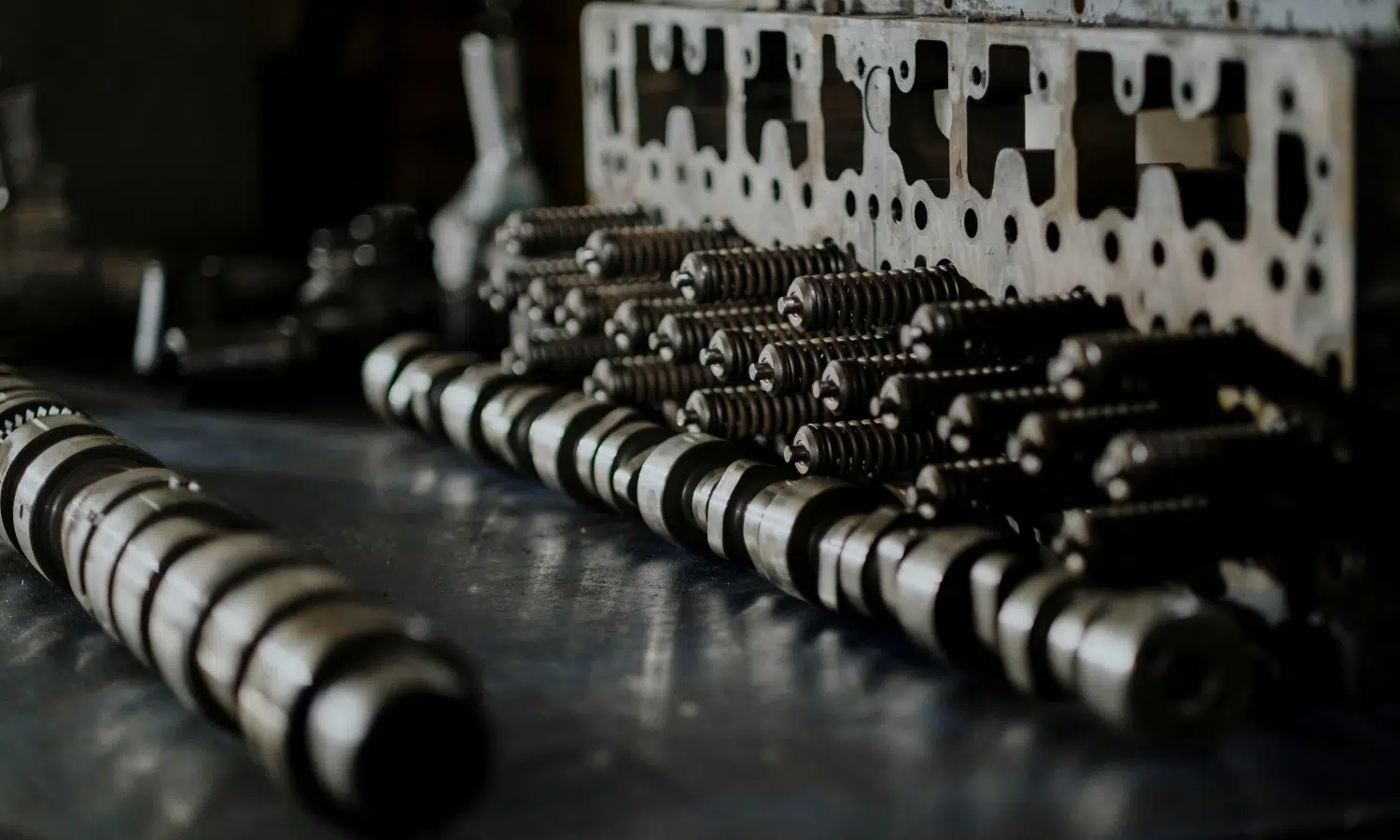
The automotive industry is one of the most demanding sectors in terms of quality and safety.
The slightest failure can result in :
- direct risks to user safety
- massive recall campaigns
- considerable industrial and logistical costs
- lasting damage to brand image
Reliability is therefore not just a technical issue : it is strategic, financial and reputational. An undetected anomaly can have knock-on effects, from the production line to the end customer.
Recent recalls have highlighted the limitations of traditional inspection methods.
Conventional visual inspection, ultrasonic testing, X-rays, on-board sensors : these
technologies are effective, but they do not guarantee comprehensive detection, especially when defects are microscopic or progressive.
Manufacturers are therefore looking for complementary technologies that can enhance existing systems without adding to the complexity of processes.
An industry under constant pressure

The pressure on industry players is constant.
Development cycles are getting shorter, platforms are becoming globalised, costs must be controlled and regulatory requirements are becoming stricter.
In this context, destructive testing, which involves dismantling, cutting or thoroughly analysing a component, represents a significant cost in terms of time and resources.
Heavy equipment, meanwhile, requires specific infrastructure and skilled operators.
Each additional inspection step can slow down production.
The challenge is therefore clear : detect faults earlier and more easily, without complicating production lines.
Materials capable of revealing the invisible
Faced with these challenges, the automotive industry can no longer be content with simply improving the performance of existing control systems. It must go beyond traditional control methods and also rethink the way defects are detected.
While technologies such as ultrasound, X-rays, infrared thermography and on-board sensors remain indispensable, they are no longer sufficient on their own to guarantee early and systematic detection of emerging defects.
What if critical information no longer came solely from complex equipment, but directly from the materials themselves ?
This is precisely the logic behind the technologies developed by OliKrom. By transforming colour into a functional indicator, OliKrom offers an innovative approach to quality control : making previously imperceptible phenomena visible.
Colour as a smart sensor
A new generation of solutions is now based on smart materials.

These technologies exploit physical and chemical phenomena that enable a material to react visually to its environment.
Depending on their design, these materials can :
- change colour depending on temperature (thermochromism)
- react to a specific chemical environment (chemochromism)
- signal excessive mechanical stress,
- reveal corrosion initiation under a coating.
In practical terms, the surface of a component can become a direct visual indicator of its condition. An abnormal rise in temperature on an electronic module, an electrolyte leak in a battery or the onset of corrosion under paint can thus be made visible without dismantling or heavy instrumentation.
The benefit is twofold : firstly, earlier detection, when the phenomenon is still reversible, and secondly, simplified reading, thanks to an immediate and intuitive visual signal.
These approaches do not replace existing control systems, but complement them. They enhance quality systems by adding a layer of information directly integrated into the materials.
Colour thus becomes a functional tool in the service of industrial reliability.
An example of application : VisioKrom®
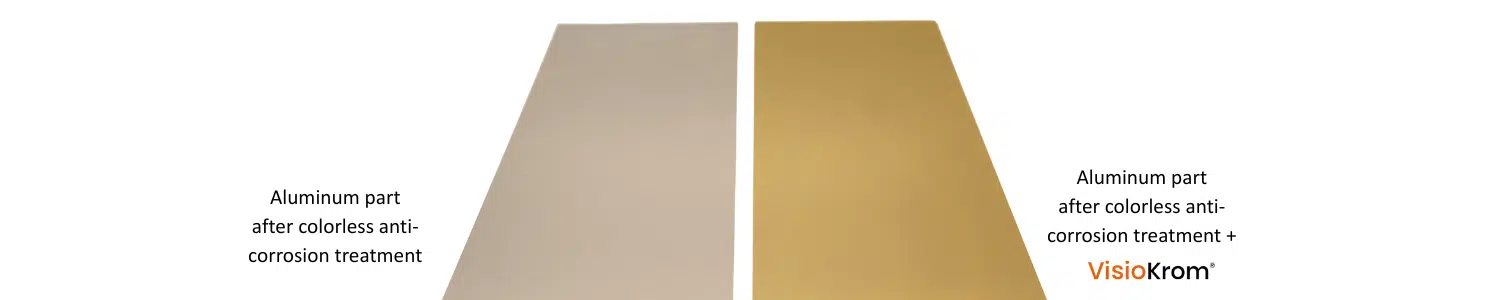
Among these technologies, VisioKrom® provides a concrete example of the integration of colour into industrial processes.
Developed by OliKrom, VisioKrom® is a coloured additive designed to be incorporated into already approved colourless anti-corrosion treatments. Its purpose is simple : to make a previously invisible deposit visible, enabling immediate verification that the treatment has been applied correctly.
The technology can be integrated without altering the technical performance of the treatment (adhesion, chemical resistance, durability), while making operations safer and simplifying quality control.

CONTACT US
We will get back to you as soon as possible..