Reading time 13 minutes
The expert's eye

In an increasingly demanding industrial environment, innovation in specialized inks is becoming an essential lever for meeting the needs of traceability, security, predictive maintenance, and smart design.
 

encre-thermochromique-serigraphie


Faced with this challenge, OliKrom has developed a range of high-performance ThermoKrom® inks. Today, it is establishing itself in the industrial world as a robust, customizable, and high-performance solution for screen printing and other application techniques.


 

Thermochromic screen printing: when ink comes to life under heat

Thermally activated chromatic variation mechanisms

In the world of printing, one technique stands out for its ability to surprise and interact with the viewer: thermochromic screen printing. Thanks to special formulations, printed designs change color when stimulated by heat, bringing creations to life that react to the environment or to touch.
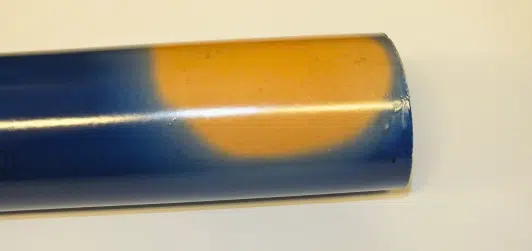
The magic happens thanks to thermochromic pigments integrated into the ink. These compounds change their structure depending on the temperature, revealing or hiding patterns, colors, or messages. On packaging, adhesive, or even plastic or metal substrates, the color transformation is instantaneous with temperature.

Intégration de la thermochromie dans les applications industrielles et design

Thermochromic screen printing is used in fields as varied as textiles, marketing, security, and design. In the fashion industry, it can be used to create interactive clothing: a T-shirt changes color when it comes into contact with body heat, or a pattern appears when an accessory is handled. Marketing packaging is not to be outdone: a logo or message can only be revealed when the object reaches a certain temperature, offering the consumer a unique sensory experience.
This type of technology also has a place in security and the fight against counterfeiting. On documents or pharmaceutical products, thermochromic material serves as an indicator of authenticity or temperature, signaling a potential problem before use. In education and leisure, these inks enable educational materials or fun games that react to heat, stimulating curiosity and learning through experimentation.

Examples of industrial applications

Industrial and functional applications - ThermoKrom® inks can be applied in a wide variety of contexts, thanks to their visual thermal sensitivity:

Safety and maintenance

  • Monitoring of overheating areas in industrial facilities.
  • Visual indicators of thermal defects on components or cables.
  • Visual monitoring of thermal cycles.

Production quality control

  • Validation of sterilization or heating cycles.
  • Permanent indication of critical thermal conditions on parts or packaging.

Interactive design and smart packaging

  • Creation of innovative visual effects on consumer products.
  • Temperature-responsive packaging (e.g., indication of optimal tasting temperature).

A technology to be handled with care

While thermochromic inks produce spectacular results, they require a certain amount of expertise: the transition temperature must be adapted to the end use, and the solutions are sensitive to light and repeated washing. Their compatibility with the substrate and other materials is crucial to ensuring durability and precision.

In a world where printing is no longer limited to applying color to a substrate, thermochromic screen printing perfectly illustrates the meeting of technical innovation and visual creativity, transforming each application into an interactive and memorable experience.


Why is the ThermoKrom® range the leading choice in the world of thermochromic inks?

The ThermoKrom® range is specially designed to meet the specific requirements of each manufacturer. OliKrom's expertise allows us to control thermochromic properties across a wide range of transition temperature thresholds, color variations, and reversible or irreversible effects, and to adapt to different application techniques and substrates.

Wide range of transition temperatures

The strength of ThermoKrom® lies in its ability to be produced with customized transition thresholds, covering a range from -30°C to +120°C, suitable for a multitude of applications. On request, extreme cases can be addressed, from low temperatures or even up to +400°C. This wide temperature spectrum allows you to:

  • Visually monitor areas sensitive to heat build-up
  • Detect critical thresholds in processes or technical surfaces
  • Integrate thermal indicators directly into components produced by screen printing.

Choice and customization of colors

ThermoKrom® offers a wide range of colors and advanced customization options:

  • Standard colors: black, red, blue, green, yellow, etc.
  • Possibility to adjust the initial color (or colorless) and the colorimetric transition response according to your aesthetic or functional requirements.

This extensive choice allows users to create visual impressions consistent with brand identity or application constraints, whether for a design effect or a technical indicator.

Reversible or irreversible: a solution for every need

The range is available in two main categories:

  • Reversible thermochromic: the ink changes color when a temperature threshold is reached, then returns to its initial color once the temperature drops below the threshold. Ideal for interactive or recurring indication applications.
  • Irreversible thermochromic: the color changes permanently after a thermal threshold is crossed. This technology is perfect for validating unique thermal events (quality control, sterilization processes, etc.).

These two modes of operation open the door to very different uses while maintaining consistent performance and reliability.

Download the ThermoKrom® product catalog   

Screen printing, a printing technique that is still relevant today: what are the key criteria?

Long associated with textiles and artistic posters, the screen printing of ThermoKrom® thermochromic inks remains an essential printing technique in many sectors today, from the graphic arts industry to visual communication. Appreciated for its rich color variations and durability, it nevertheless relies on several essential technical criteria that determine the stability of the final result.


Expertise in formulation and thermochromic pigments

The first element is control over pigment size and color development. Behind the brilliance of a printed color lies a subtle balance between chemistry, physics, and industrial know-how. In screen printing, as in other printing processes, pigment size and color development play a decisive role in the final result, far beyond what the eye can perceive.

Thermochromic pigments are solid, insoluble particles that are responsible for the color of the ink. Their microscopic size, generally between a few fractions and a few micrometers, directly influences the intensity, opacity, and regularity of the application. A very fine thermochromic pigment offers better dispersion in the ink binder, allowing for a more consistent and vivid color response. Conversely, a coarser pigment can enhance coverage, but at the expense of fine detail.

In screen printing, this issue is particularly important. The pigment must be small enough to pass through the screen mesh, but not so fine that it loses its opacity. An imbalance can lead to technical problems such as screen clogging or uneven printing. This is why ThermoKrom® screen printing solutions are specifically formulated for each type of substrate and mesh.

Screen printing process settings and media compatibility

Another key factor is the printing substrate and the suitability of the thermochromic ink. Unlike other processes, screen printing can be used on a wide variety of materials: paper, textiles, plastic, glass, and metal. The nature of the substrate, its color, and its texture directly influence the choice of solutions and the visual result. A dark textile, for example, will require a more opaque thermochromic ink to ensure that the design is clearly legible.

For each substrate, the performance of the ink in relation to the screen printing screen, often called a stencil, also plays a crucial role. The mesh size of the screen determines the fineness of the printed details: a fine mesh allows for greater precision, while a coarser mesh favors thicker ink coverage. The tension of the screen is also essential to ensure a clean and even pigment deposit.

For each of these parameters, the ink deposit determines the distribution of pigments throughout the thickness of the printed film. This architecture directly influences the way light is absorbed or reflected, and therefore the final perception of color. A layer of ink that is too thick can darken the thermochromic color, while a deposit that is too thin will make it duller or translucent.

Screen pritning process settings and media compatibility

The choice of ink is another key criterion. Water-based, plastisol, UV, or solvent-based inks: each has specific properties in terms of opacity, wash resistance, durability, and environmental impact. This choice is strategic, especially for prints intended for heavy use.

Drying or polymerization marks the final stage of color development. In water-based solutions, evaporation of the liquid concentrates the thermochromic pigments and intensifies the color. Plastisol inks, commonly used in textile screen printing, reveal their full color during baking, when the binder polymerizes. As for UV formulations, their almost instantaneous cross-linking guarantees high color stability.

Screen management and deposition settings

Another major parameter is the number of color variations. In screen printing, each color requires a separate screen, which directly impacts preparation time and production costs. This is why this technique is particularly suited to visuals composed of solid colors and medium to large production runs.

Print settings, such as the pressure exerted by the squeegee, its angle, or its speed, influence the thickness of the ink deposit and the uniformity of the result. Poor control of these settings can lead to visible defects, such as smudging or lack of density.

Influence of the substrate and pigment dispersion

Finally, the printed color cannot be separated from its substrate. The perceived hue depends on the pigment concentration, its coloring power, but also on the hue and texture of the printed material. On dark textiles, for example, a white undercoat is often necessary to preserve color fidelity.

Behind every printed color lies an invisible mechanism in which the size of the thermochromic pigment, its dispersion, and its interaction with the substrate determine the success of the final result. This precision work reminds us that, in the world of printing, colorimetric response is as much a matter of science as it is of technique.

Finally, the screen printing process must now contend with growing environmental challenges. The use of more environmentally friendly thermochromic products, the reduction of solvents, and better waste management are now an integral part of the selection criteria for professionals in the sector. All of our heat-activated ink formulations are developed to meet these challenges.

Feel free to ask our engineers at OliKrom any questions you may have.

French manufacturing and certified performance

usine-production

When "Made in France" becomes an industrial challenge at the heart of technical innovation

At a time when industrial sovereignty and the relocation of production have become strategic issues for France, our Gironde-based company has decided to transform a scientific ambition into a genuine national industrial project. At OliKrom, we rely on "Made in France" to design, produce, and market innovative smart inks and paints—materials capable of reacting to light, pressure, or temperature, and whose production is entirely based in France.

This choice was born out of a twofold conviction: on the one hand, the need to control the entire value chain—from pigment to finished ink—to guarantee performance, traceability, and efficiency; on the other hand, the importance of securing supplies in a global context often marked by shortages or foreign dependencies for specific chemical materials.

The Pessac plant, with its 1,600 m² initially dedicated to this mission, embodies this strategy. All inks, paints, and products developed by OliKrom—whether UV and solvent-based inks for screen printing or pad printing, or thermochromic paints—are manufactured in this same facility.

ThermoKrom®: expertise in thermochromic inks for industrial screen printing

The ThermoKrom® range embodies an innovative, reliable, and fully customizable solution for thermochromic solutions for screen printing and other pigment deposition applications. With a wide choice of transition thresholds, a range of adjustable colors, and reversible or irreversible versions, ThermoKrom® meets the challenges of technical industries and the most demanding design creations.

FAQ – Everything you need to know about thermochromic inks

  • How does thermochromic ink work?

Thermochromic ink contains smart pigments that can change their chemical structure when exposed to heat. When the set temperature is reached, the pigment changes color, becomes transparent, or reveals a different color.

In the case of a thermochromic product for screen printing, these pigments are incorporated into a formulation specifically designed to ensure good dispersion, optimal passage through the screen mesh, and stability of the color change. Depending on the application, the change may be reversible (the visual signal returns when the thermal threshold drops again) or irreversible (the transformation is permanent once the threshold has been exceeded).


  • What are the common uses of thermochromic inks?

They are used for both functional and visual applications. In industrial environments, they serve as indicators of thermal thresholds, overheating, or validation of thermal cycles (sterilization, cooking, heating).

In the field of packaging and interactive design, they can be used to create dynamic visual effects, such as indicating a product's optimal thermal threshold or revealing a message when exposed to heat.
Thermochromic screen printing is also used in security, anti-counterfeiting, technical textiles, and visual communication, thanks to its ability to produce durable, legible, and reproducible prints.


  • What is the advantage of heat-sensitive ink for screen printing?

The advantage of heat-sensitive ink in screen printing lies in its ability to add a smart visual feature to a print, beyond simple aesthetic appeal. Unlike conventional ink, it reacts to heat by changing color or state, making otherwise invisible thermal information visible.

The screen printing process is particularly well suited to heat-sensitive formulations, as it allows for controlled and reproducible ink deposition, which is essential for the proper functioning of heat-sensitive color-changing pigments. This technique guarantees good opacity, clear reading of the visual signal change, and excellent durability over time, even on technical substrates.

Read more

On an industrial level, heat-sensitive ink for screen printing allows:

  • visual monitoring of overheating or critical thresholds on components,
  • validation of thermal cycles (sterilization, baking, heating),
  • integrate safety or quality control indicators directly onto parts or packaging.

In terms of design and communication, it creates interactive and distinctive prints:

  • revelation of messages or patterns when heated,
  • indication of optimal temperature for use or consumption,
  • dynamic visual effects without electronics or sensors.

Finally, thermosensitive ink applied by screen printing offers an excellent compromise between functionality, reliability, and industrialization. It allows intelligent materials to be integrated directly into the print, without adding components, while remaining compatible with medium and large-scale production runs.

Reduce