Reading time 12 minutes
The expert's eye

In a constantly changing world marked by climate emergency, energy transition, and the need to innovate in order to remain competitive, mastering disruptive technologies has become a major strategic challenge. Among the players contributing to this movement, OliKrom has established itself as a key French reference in the field of color intelligence.
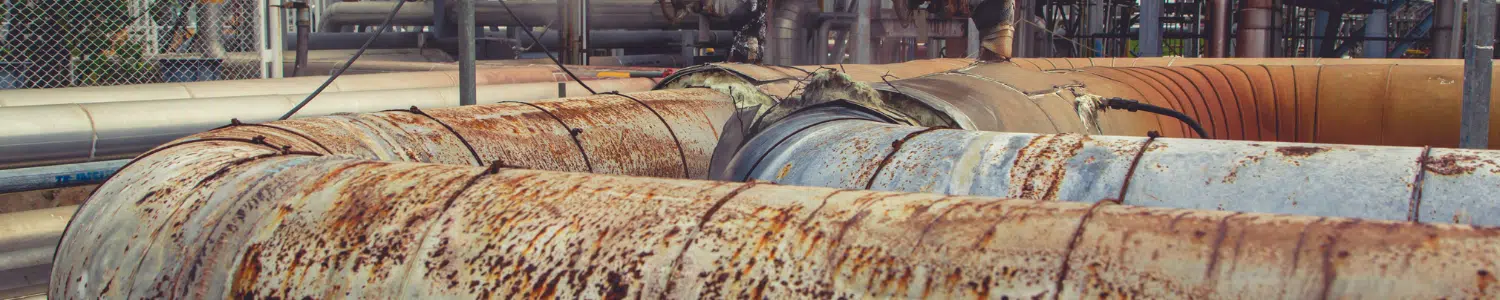
 

maintenance-preventive-corrosion


When color becomes an advanced surveillance tool

A new approach is therefore gradually emerging: the use of smart materials capable of changing color depending on their environment. Through these technologies, color becomes a real diagnostic tool, an instant visual indicator, and an aid to predictive maintenance. This paradigm shift is revolutionizing the way manufacturers monitor their infrastructure.

OliKrom, a pioneer in smart color-changing materials, is fully committed to this evolution. Thanks to its research into reactive chemical pigments and concrete solutions such as VisioKrom®, the company provides an innovative response to the current challenges of detecting corrosive phenomena.

This article provides a comprehensive overview of this silent revolution: the use of color intelligence in corrosion detection, its challenges, advances, and impact on industry.

Industrial challenges related to corrosion detection

A colossal economic cost 

Corrosion costs hundreds of billions of euros worldwide every year. (Source: Association for Materials Protection and Performance)

In certain sectors such as aeronautics, offshore, energy, and rail, it is responsible for:

  • Material loss and structural weakening
  • Unplanned production stoppages
  • Emergency maintenance operations
  • Premature component replacements
  • Increased regulatory inspections and audits

For manufacturers, the challenge is therefore not only to combat corrosion, but above all to take action as early as possible, before the phenomenon becomes irreversible. Once corrosion sets in, degradation accelerates: materials lose their mechanical strength, protective coatings peel off, and parts sometimes have to be completely replaced.


This anticipation is essential to avoid unexpected production stoppages, limit costly repairs, and ensure continuity of operations. The earlier corrosion is detected, the more targeted, rapid, and cost-effective the response can be. Conversely, corrosion detected too late can lead to critical failures, additional regulatory constraints, and risks to the safety of teams and the reliability of infrastructure.

Undetected corrosion can lead to operational risks and critical failures:

  • Rupture of pressurized pipes
  • Weakening of structural components
  • Perforation of tanks
  • Delamination of protective layers
  • Reduction in the service life of strategic components

Certification authorities now require detailed traceability, proof of compliance, and regular inspections. In aeronautics, for example, MRO programs are becoming increasingly strict, and operators must ensure continuous monitoring of sensitive areas.

The challenge is therefore no longer just to protect, but to monitor intelligently in order to intervene at the most appropriate moment.

The limitations of traditional detection methods

Despite recent advances, traditional non-destructive testing techniques used to detect corrosion still have many operational limitations.

They are often sporadic, carried out at regular intervals rather than continuously, which allows corrosive phenomena to progress silently between inspections. They are also complex, requiring sophisticated technologies such as ultrasound, X-rays, magnetoscopy, or eddy currents, the implementation of which requires specific logistics, expensive equipment, and sometimes a controlled environment.

These methods can also be slow, particularly when certain components need to be dismantled, confined areas accessed, or surface preparations carried out in order to obtain reliable measurements. They are also costly, as they require not only the use of specialized equipment, but also the immobilization of machines or infrastructure for the duration of the inspection.

Finally, their effectiveness depends heavily on the experience and skill of the operator: interpreting signals, detecting subtle defects, or recognizing early signs of corrosion requires specialized expertise. This dependence on highly qualified personnel can lead to disparities in diagnostics and even risks of under-detection in the most complex industrial environments.

For example, underfilm corrosion, which is considered insidious, progressive, and invisible to the naked eye, is a major challenge. As long as the protective layers remain visually intact, degradation can develop silently for months.

This observation reveals a need: technologies capable of providing passive, continuous, and immediately interpretable surveillance.

Color intelligence: a new approach to surveillance 

What is color intelligence?

intelligence-couleur

Color intelligence defines a material's ability to react to a stimulus (chemical, mechanical, light, etc.) by changing its color in a controlled manner. This change, which is often reversible or irreversible depending on requirements, becomes a visual signal that can be interpreted by the naked eye or via vision systems.

In the field of corrosion detection, it is mainly chemical and physicochemical stimuli that are sought.

A direct response to industrial needs

Smart materials offer multiple advantages:

  • Early detection of corrosion initiation, before visible damage occurs
  • Passive monitoring, without electronics, maintenance, or energy
  • Immediate reading: a simple color change signals an anomaly
  • Cost reduction: fewer in-depth inspections, targeted interventions
  • Anticipation and predictability: color becomes an indicator of the phenomenon's evolution


In short, these smart materials enable an invisible process to be transformed into visible information, revealing at an early stage what until now has been developing discreetly under coatings or inside structures. Corrosion is by nature an insidious phenomenon: it progresses out of sight, often under layers of paint or in areas that are difficult to access, until it reaches a stage where the damage becomes visible... and costly to repair. Thanks to color changes induced by chemical or environmental stimuli, colorimetric smart materials make these weak signals immediately perceptible, providing a direct reading of a surface's condition.

This instant visualization transforms monitoring: operators no longer need to systematically resort to sophisticated control instruments or heavy dismantling to identify the onset of deterioration. A quick glance is all it takes to detect an anomaly, prioritize an intervention, or trigger a thorough inspection. Color thus becomes a powerful source of information, accessible to all, facilitating decision-making and enhancing the responsiveness of maintenance teams.

How can color help combat corrosion?

Color is no longer just an aesthetic choice or a means of industrial identification. Thanks to advances in materials science, it is now becoming a strategic tool in the fight against corrosion, capable of acting on two complementary levels:

  1. by revealing the appearance of a corrosive phenomenon as soon as it first appears,
  2. by ensuring the correct application of anti-corrosion treatments, particularly when they are colorless.

These two approaches are transforming the way manufacturers monitor and protect their infrastructure, providing visibility, traceability, and responsiveness.

OPTION 1 – Detect corrosion as soon as it starts using smart pigments

In its most innovative form, color becomes an active indicator of material behavior. Certain smart coatings or pigments can react to:

  • The appearance of metal ions resulting from oxidation
  • Local pH variations characteristic of a corrosive environment
  • The presence of moisture trapped under coatings
  • Aggressive agents such as chlorides or oxidants

When these chemical signals appear, the material changes color, immediately indicating either the onset of underfilm corrosion, often invisible to the naked eye, or an area under stress or weakened, or a leak or protective failure.

This early detection allows action to be taken before the problem becomes critical. Without this visual signal, corrosion can progress silently for months, leading to significant structural damage, production stoppages, or costly repairs.

The contribution of color is fundamental here: it transforms an invisible process into visible information that is immediately accessible without complex instrumentation.

OPTION 2 - Ensure the correct application of anti-corrosion treatments

Color can also play a role upstream of the corrosive phenomenon, by ensuring the effectiveness of the protective coatings applied. In many sectors, particularly aerospace and defense, the most effective anti-corrosion treatments are colorless. This lack of color presents a major risk: it is impossible to verify with the naked eye whether the part has been properly treated, whether the coating is uniform, or whether certain areas have been missed.

It is in this context that the addition of a colored additive to anti-corrosion systems makes perfect sense. This type of additive:

  • visually reveals the protected area
  • serves as a deposit indicator
  • allows you to check the uniformity of application
  • reduces defects and rework
  • facilitates traceability and quality validation

This second approach is at the heart of the development of innovative solutions such as VisioKrom®, a colored additive incorporated into colorless anti-corrosion treatments used in demanding sectors such as aerospace and defense.

VisioKrom®: a concrete application in corrosion detection and control

Beyond the principle itself, the value of this approach is best measured when it is deployed in real industrial environments, subject to particularly high quality, traceability, and safety requirements. Some players have already taken this step by integrating colored additives directly into their anti-corrosion processes, demonstrating the added value of immediate visual inspection. Among these solutions, VisioKrom® is now establishing itself as the benchmark for operational implementation, capable of meeting the most critical requirements.

A colored additive to reveal anti-corrosion treatments

VisioKrom® is a colored additive developed by OliKrom, specifically designed to be incorporated into colorless anti-corrosion treatments that are already certified and widely used in industry. Its role is simple and strategic: to make a deposit visible that was previously invisible. By providing controlled coloring at the time of application, it allows instant verification of the proper coverage of a part or surface, without altering the primary function of the protective coating.
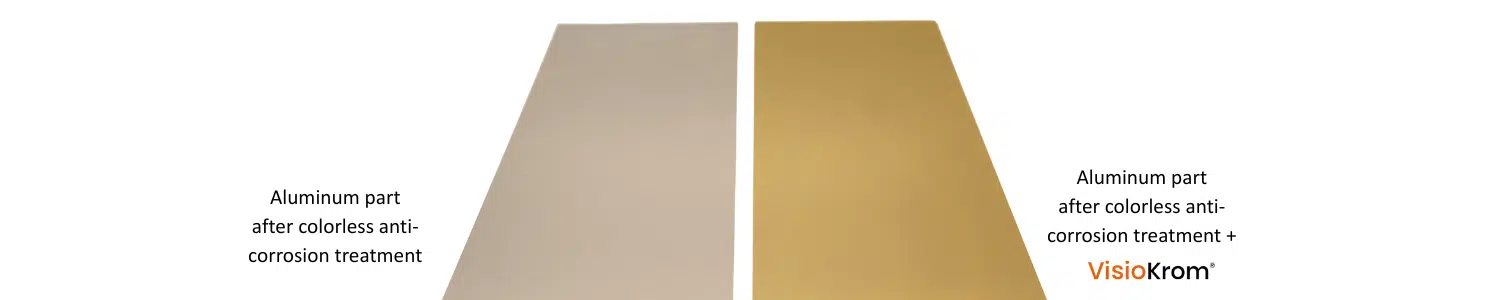
 

before-after-visiokrom


One of VisioKrom®'s strengths lies in its technological discretion: it integrates into the anti-corrosion system without altering its performance, adhesion, chemical resistance, or durability. In addition, it is compatible with the very strict requirements of the aerospace and defense sectors.

In practical terms, thanks to VisioKrom®, the operator can check at a glance:

  • whether the area to be protected has been completely covered
  • whether the thickness applied is uniform
  • whether there are any gaps, excess thickness, or drips


This immediate readability is a major advantage in terms of traceability and safety, eliminating the uncertainty associated with applying an invisible product. It significantly reduces the risk of human error, particularly when working in difficult conditions: complex parts, hard-to-reach areas, low light, on-site operations, etc.

Considerable benefits for manufacturers

The integration of a smart colored additive into colorless anti-corrosion treatments is profoundly changing the way manufacturers control their processes. Among the most notable benefits are:

  1. Increased reliability of application operations
  2. Significant reduction in processing defects
  3. Reduction in costly rework and re-inspections
  4. Acceleration of MRO (Maintenance, Repair & Overhaul) cycles
  5. Improved document traceability for quality audits
Download the VisioKrom® product catalog.   

Standardization of practices between teams and production sites

Beyond immediate gains, this approach helps to strengthen the quality culture of organizations and secure critical infrastructure. By ensuring that every surface is properly protected from the very first application, VisioKrom® helps to prevent corrosion and extend the service life of equipment.

This is a concrete, practical example of how color intelligence can be used for corrosion prevention and control: an innovation that is simple in principle, but which brings considerable added value in the field.

Color at the heart of predictive maintenance

industrie-maintenance-predictive

Moving from corrective maintenance to predictive maintenance

Traditionally, maintenance plans are based on a fixed schedule, accumulated operating hours, or interventions after the first visible damage appears. Colorimetric detection allows for a more refined approach:

  • it detects the first weak signals
  • it triggers intervention before the critical phase begins
  • it reduces unplanned downtime
  • it optimizes the service life of parts

Technologies based on color intelligence offer continuous monitoring, even without an operator present. They are an accessible diagnostic tool that can be quickly interpreted and requires no energy.

The industrial sectors affected by these technologies

The growing interest in color intelligence stems from its ability to meet very specific needs in the field. Many industrial sectors, faced with harsh environments or particularly high quality requirements, see these technologies as an effective lever for strengthening their protection and maintenance strategies.

application-aeronautique

Aerospace and defense

Areas where even the smallest technical or hardware failure can have critical consequences.

Potential applications of smart materials:

  • Visual inspection of colorless treatments (using VisioKrom®)
  • Under-film detection on certain structural parts
  • Inspection assistance on composite/metal areas

application-industrie

Energy, gas, and offshore

Harsh environments where corrosion is exacerbated by saline atmospheres, high mechanical stresses, and significant thermal cycles.

Potential applications of smart materials:

  • Monitoring of pipelines and buried or submerged pipes
  • Visual inspection of protective coatings applied to offshore structures
  • Early detection of leaks or chemical corrosion on tanks

application-transport

Mobility and rail transport

Infrastructure subject to repeated mechanical stress, humidity, road spray, and extreme weather cycles.

Potential applications of smart materials:

  • Visual inspection of anti-corrosion treatments applied to chassis and bogies
  • Early detection of corrosion on metal structures of engineering structures
  • Monitoring of port and logistics equipment exposed to maritime atmospheres

application-mettalurgie

Heavy industry and metallurgy

Installations exposed to particularly aggressive environments: acidic or basic vapors, atmospheres laden with corrosive particles, high temperatures.

Potential applications of smart materials:

  • Monitoring areas exposed to corrosive vapors in production units
  • Visual inspection of protective coatings applied to metallurgical equipment
  • Detection of leaks or chemical damage on transfer networks

expertise-olikrom

What sets OliKrom apart: unique expertise in smart materials

What truly sets OliKrom apart is its unique ability to master the entire value chain of smart materials, from pigment design to the formulation and production of operational solutions tailored to the most demanding industrial constraints. This comprehensive integration enables the development of tailor-made, high-performance, and reproducible technologies, while ensuring their compatibility with regulated environments such as aerospace, defense, energy, and chemicals.

With over ten years of expertise and a model based on co-innovation, the company works closely with numerous industrial partners to transform field requirements into reliable, qualified products that can be deployed on a large scale. This multi-sector approach fuels innovation by promoting the transfer of solutions from one field to another, thereby accelerating their maturation and adoption.

By combining scientific excellence, industrial expertise, and personalized support, OliKrom has established itself as an international leader in smart color-changing materials, capable of providing concrete, high-value-added solutions to challenges in safety, traceability, and operational performance.


Choosing OliKrom means:

  • Benefit from unique expertise covering the entire development cycle, from smart pigments to ready-to-use industrial products
  • Secure your processes with proven solutions that are compatible with the most demanding and regulated environments
  • Optimize your maintenance and control operations by reducing errors, rework, and costly downtime
  • Rely on a committed partner capable of co-designing and industrializing innovations tailored to your needs in the field.


Color, a strategic tool for industrial performance

Corrosion detection is entering a new era. Thanks to color intelligence, color is no longer just an aesthetic feature: it has become a sensor, an indicator, and a decision-making tool. The smart materials developed by OliKrom, particularly through solutions such as VisioKrom®, make it possible to anticipate corrosion rather than suffer from it, improve the reliability of inspections, and above all reduce maintenance costs.

In an industrial context where performance, traceability, and predictability are key, color intelligence is a major driver of innovation. It is a discreet but fundamental technology that is quietly transforming the way manufacturers monitor and protect their assets.

Want to learn more about integrating smart materials into your processes or discuss a specific project?

Our R&D and industry teams are at your disposal to assist you.


FAQ – Corrosion Detection and Color Intelligence

  • Can smart materials replace non-destructive testing?

No. They do not replace non-destructive testing (NDT) methods such as ultrasound or X-rays, but rather complement them. Their role is to provide continuous visual monitoring, enabling rapid identification of areas at risk and targeting in-depth inspections, thereby reducing unnecessary downtime and dismantling.


  • Do colored additives such as VisioKrom® alter corrosion protection performance?

No. VisioKrom® integrates into the treatment without altering its properties: adhesion, chemical resistance, durability, or mechanical strength. It acts solely as a visual indicator of application, ensuring that the protection has been correctly applied.


  • What is the main benefit for manufacturers?

The main benefit lies in reducing risks and costs: fewer application defects, fewer reworks, improved traceability, faster inspections, and extended equipment life. Color becomes a valuable tool for decision-making and operational safety.